
Student Safety
To help you stay safe we have outlined potential risks in the area to be mindful about and best safety practices.
Student safety
London is an exciting and generally safe place to be, like any large city, it's so important to understand potential risks and know how to stay safe.
Most of the crimes in the local area are ‘petty crimes’ such as stolen phones or bicycles. Around 80% of crime is opportunistic, which means it can often be prevented.
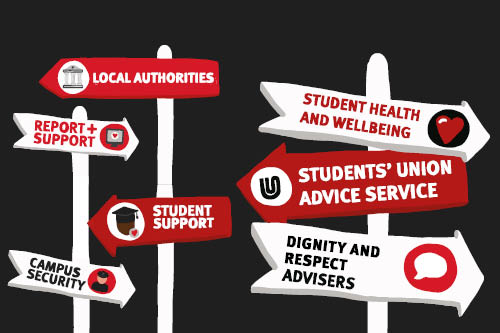
Our Stay City Safe campaign is all about helping you recognise signs that may affect your safety. This space highlights what you can do if something goes wrong, how to report a crime and where to go for support.
You can download your student safety booklet: Your guide to staying safe in London
Safety on campus and in the city
Explore a range of topics including advice on preventing theft, staying safe on nights out, and extra guidance for international students. Find support and resources to help you feel safe and confident. Choose a topic below to get started:
Safety on campus and in the city
| Safe relationships | Bullying & Harassment
|
Spiking | Safety online
| Support services |
Staying safe when studying late
| Bystander and Consent training
|
The information on these pages is designed to be informative and isn’t intended for emergency situations. If you are in immediate danger, please call 999. You can also contact City St George’s Campus Security through their 24/7 emergency line.
Stay City Safe
Meet teams from across City St George’s who are here to support your safety and wellbeing, created as part of our Stay City Safe campaign (2 minutes)
Bystander Intervention and Consent training
Here at City St George’s, we are committed to creating an environment where everyone feels safe to thrive in their studies and work. Essential to this is ensuring that everyone in our community feels confident and informed to understand consent, and to have the tools to navigate situations where they witness harassment or abuse.
Bystander Intervention and Consent for Student training modules are now available to all students through your online learning environment. Each module takes around 30 minutes to complete and can be done in one go, or you can save your progress as you go.
Access your training
Clerkenwell and Moorgate students: Access your Bystander Intervention and Consent training on Moodle
Tooting students: Access your Bystander Intervention and Consent training on Canvas
A dedicated webpage on the main University website is available where you can find all the policies, guidance and support on harassment and sexual misconduct.
Access support
If you need support, City St George’s team are here to help you. Here are their contact details:
Clerkenwell and Moorgate students: Visit the Student Support Hub on Level 1, Drysdale Building, for in-person support or reach out to our Student Advisers online via Support@City.
Tooting students: Visit the Student Support Hub on the ground floor of Hunter Wing, or get in touch with our Student Advisers by emailing studentsupporthub@sgul.ac.uk.
Merging City and St George’s Resources
As we bring together resources for City (Clerkenwell) and St George’s (Tooting) students, some content may be specific to one campus and not the other. For the most relevant information, try using specific keywords or exploring content related to your department. If you need help, our support teams are available to guide you.
Clerkenwell students can contact campus.news@citystgeorges.ac.uk
Tooting students can contact studentlifecentre@sgul.ac.uk.