
Academic Appeal Procedure
Students who believe that their examination marks meet grounds for review may be eligible to request this under the Academic Appeal Procedure.
For Tooting Campus Students
The information below is for students studying at the Tooting campus.
Guidance for Clerkenwell and Moorgate students can be found on the Extenuating Circumstances page.
What is an academic appeal?
The University launched a new Academic Appeal Procedure in September 2025. Please read this carefully before submitting an appeal.
An academic appeal is a formal request by a student or students for the review of a decision affecting them that has been made by an academic body charged with making decisions on student progress, assessment and awards.
The timeframe for making an academic appeal is 20 working days of the release of results following the relevant Assessment Board.
What you can appeal
- academic progression decision
- agreed credits or marks, or degree classification
- penalty for failing to make progress including programme termination
- outcome of an extenuating circumstances (ECs) application.
What you cannot appeal
- against academic judgement (please refer to section 23.b of the Appeals Procedure to understand what academic judgement means)
- a matter that has already been the subject of an academic appeal that is in progress or has been decided;
- a matter subject to legal proceedings in a court or tribunal unless those proceedings have been put on hold;
- marks or grades in question are provisional and have not yet been ratified by a Board of Examiners. Dates of Board of Examiners Meetings can be found in the examination calendar and details on appealing provisional results are available in section 14 of the General Regulations.
- an academic decision using evidence that is dishonest or has been acquired dishonestly.
- an academic decision if the evidence put forward to support the appeal can be shown to be malicious or represent a way of harassing the University by consuming the time and resources of its staff or a way of harassing members of staff and other students.
- decisions made in relation to academic misconduct, which has a separate appeal process. Further information on the Academic Integrity Procedure.
Grounds for making an appeal
The University considers that an academic appeal may be made when there is independent evidence to show that:
a. there has been a material error that has affected the Assessment Board’s decision |
b. you were subject to previously undisclosed extenuating circumstances at the time of the assessment that are relevant to the Assessment Board’s decision |
c. that staff/bodies have shown bias or a reasonable perception of bias towards the student in the way they have made the relevant academic decision |
How to apply
Fill in this form to appeal an academic decision. Please submit the completed form along with all supporting evidence as attachments by emailing them to scc@sgul.ac.uk.
Other Academic Procedure Resources
Mitigating Circumstances, Provisional Appeals, and Formal Academic Appeals
Delivered by Miss Frances Stannard, Student Conduct and Compliance Officer.
This presentation covers the grounds for submitting formal academic appeals and explains how mitigating circumstances processes, provisional appeals and formal academic appeals all link together.
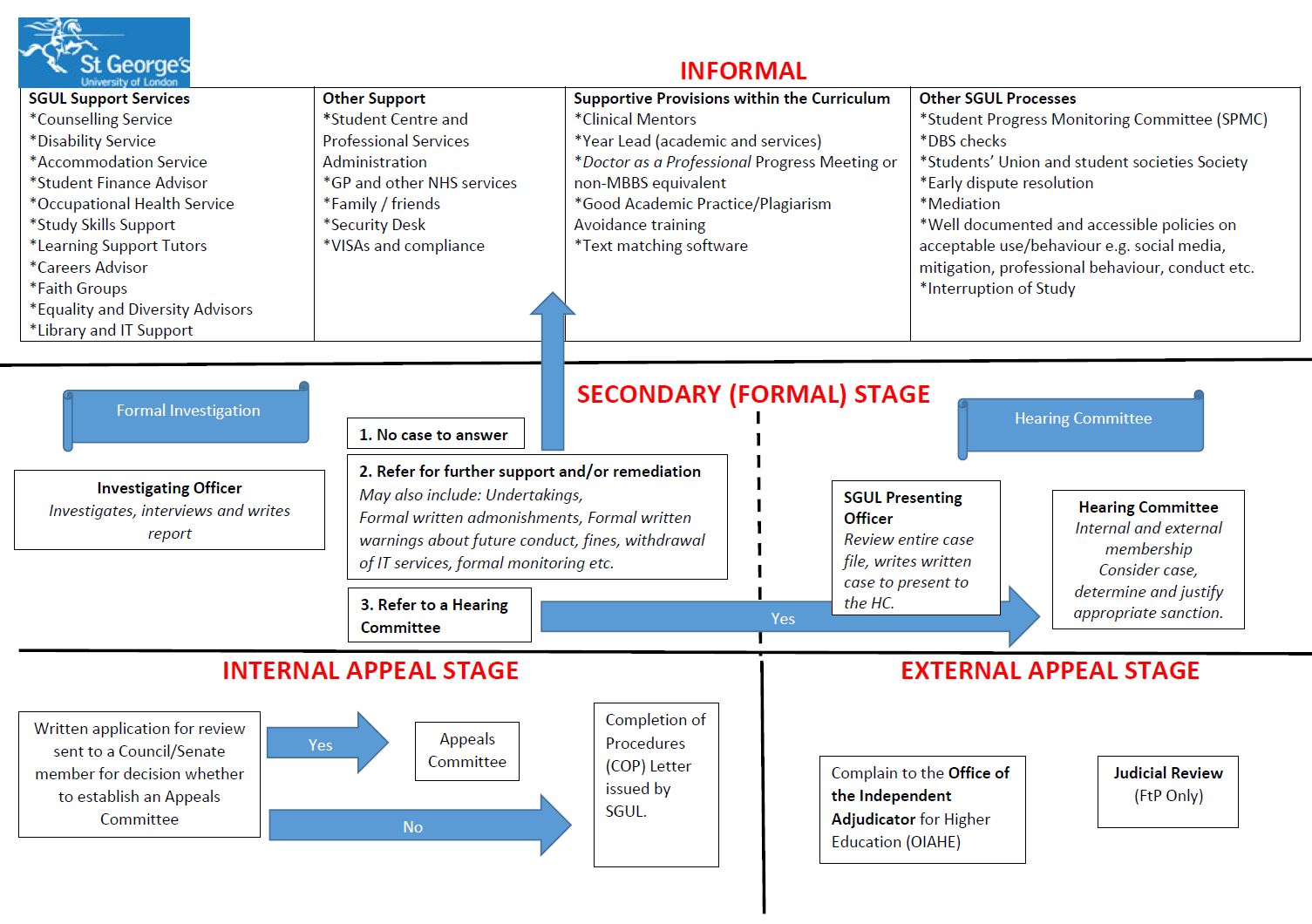
Overview diagram
The diagram below provides an overview of how the various roles described within the presentations map onto the Student Procedures that you may have been asked to act under.
- Overview diagram (JPG).
Merging City and St George’s Resources
As we bring together resources for City (Clerkenwell) and St George’s (Tooting) students, some content may be specific to one campus and not the other. For the most relevant information, try using specific keywords or exploring content related to your department. If you need help, our support teams are available to guide you.
Clerkenwell students can contact campus.news@citystgeorges.ac.uk
Tooting students can contact studentlifecentre@sgul.ac.uk.