Learn how the pride flag has been created and changed over the years.
Published Friday, 18th June, 2021 in University news
Have you ever wondered why the rainbow flag has become synonymous with Pride celebrations across the world? Urged by Harvey Milk to create a symbol of pride for the gay community in 1978, it was Gilbert Baker who designed the first rainbow flag.
In his original design, Baker adopted eight striped colours, each self-containing a meaning (hot pink for sex, red for life, orange for healing, yellow for sunlight, green for nature, turquoise for magic/art, indigo for harmony and violet for spirit).
However, production issues meant the hot pink colour could not be easily mass-produced and was subsequently removed from the flag. 1979 then saw the removal of turquoise to keep the number of stripes even at 6 and indigo was changed to a more standard blue. This is the 6-striped flag that remained in popular use for many years. In 1994, to mark the 25th anniversary of the Stonewall riots, Baker even made a mile-long version of the flag!
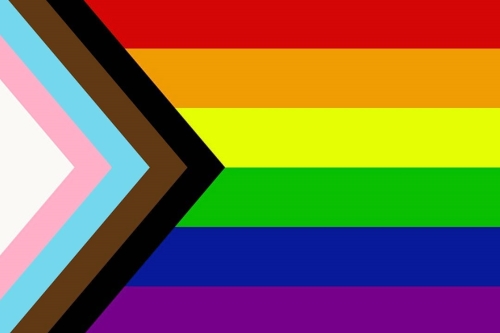
In 2018, Daniel Quasar then designed what is known as the ‘Progress’ Pride Flag, which uses the 6 traditional stripes of the pride flag and includes at the hoist the colours of the transgender pride flag (light blue, pink and white) and black and brown stripes in the form of triangles to represent marginalised LGBTQ+ communities of colour. This is the design widely used today as it places greater emphasis on inclusion and progression, though there have also been many other adaptions of the Pride flag to include other groups within the LGBTQ+ community.
For a more in-depth explanation of the History of the Gay Pride Flag, check out the “Flag This!” YouTube video.